
Pewter is an alloy, in other words, different metals are mixed to make a new metal.
Traditionally, lead was used in pewter.
Modern English Pewter is highly regulated and is lead free, modern bobbins with pewter in them from reputable bobbin makers such as Chris Parsons are safe to use but you should always check with the maker to be sure.
However, antique bobbins are a different story altogether.
There are two issues with the lead that is in these bobbins.
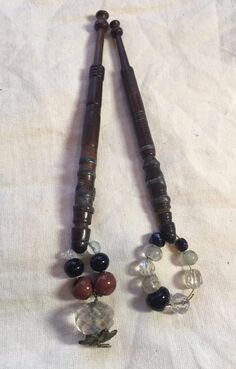
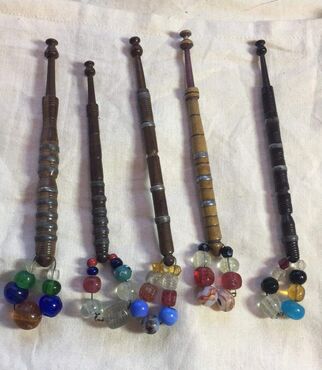
Toxicity
Lead is easily dissolved in acidic environments - this means that simply handing lead or lead based metals can cause the lead to leach out onto the skin.
Wash your hands
Always wash your hands thoroughly after handling any antique bobbin that has pewter on it
Keep your bobbins away from children and animals
Little hands like to touch and then lick their fingers whilst furry paws don't understand 'do not touch' signs. So, it's easier to just put them out of reach.
Don't store under glass
Bobbins should be stored out on a shelf or on a stand, putting them under glass, where there is little or no air circulating will cause blooming
Not just wood, but also bone bobbins
Remember, pewter inlay appears on both wooden and bone antique bobbins.
A Nasty History
Lead has a toxic history (sorry, couldn't resist the pun), from being included in the paint on toys being used as a sweetener in drinks. Yes, there was a history of adding lead to cider to make it sweeter leading to brain damage and death and is the origin of the jokes about 'country yokels'.
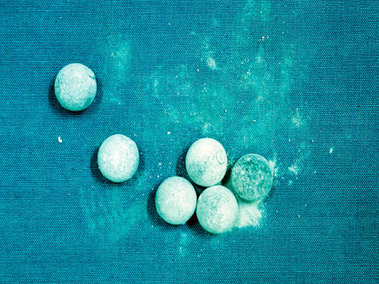
Blooming
Lead can oxidise and start to have a white 'bloom' on it. This is a sign of 'lead disease'.
Keeping antique bobbins in airtight containers will cause blooming.
The first thing is do not touch this with your bare hands. Put on gloves.
If you find that an antique bobbin has developed blooming then follow the advice from the Western Australian Museum on treating lead bloom.