Don't have time to read the blog? Then why not listen to it on my podcast?
Don't miss an episode - subscribe here
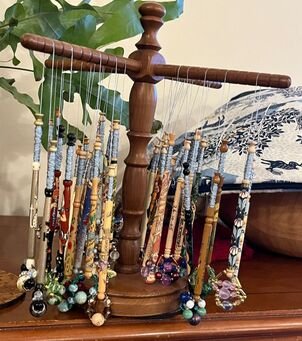
In a recent post on Lace Bobbins - Find the Maker, I posted about having chosen to work with wooden bobbins on a short piece.
This then raised the question as to what other materials bobbins can be made from.
If the designs on your bobbins tell the story of your life through commemorating events or places you have been, then what they are made of tell the story of how you create lace.
The images that I've used below are from my own collection of modern and vintage bobins.
These are predominately East Midlands but bobbins come in as many styles as there countries that make lace. The type of material will vary from country to country for traditional bobbins but with the advent of global commerce, there has been greater acces materials worldwide so traditional materials are less confined to particular countries
If you would like to know more about styles of bobbins then do go to my bobbin page.
Material Types
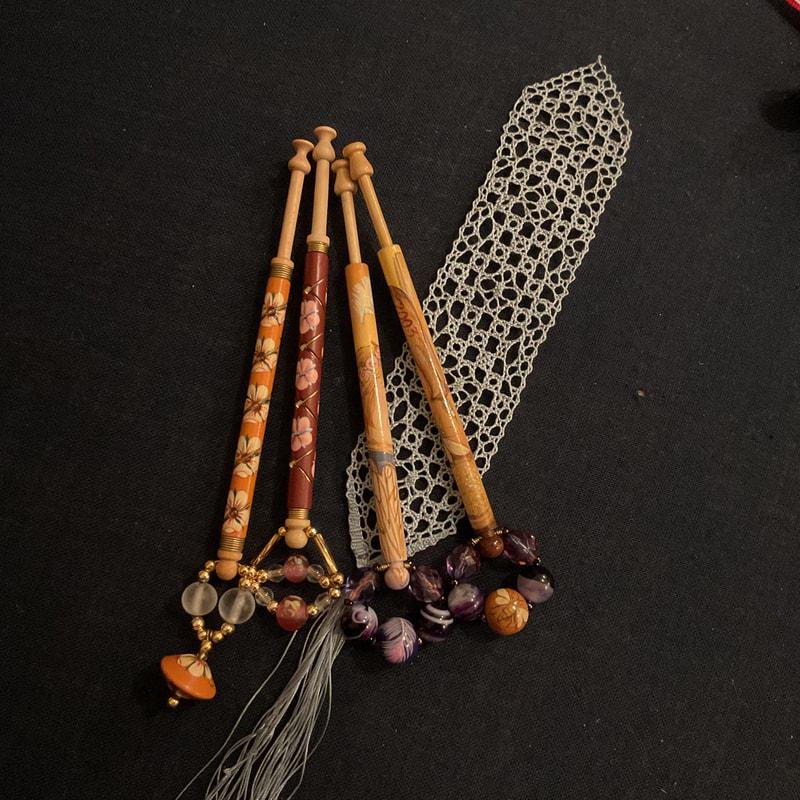
Wooden Bobbins
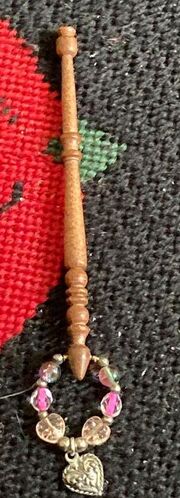
Wooden bobbins are the most widely available bobbins simply because of the availability of wood, ease for turning and price point.
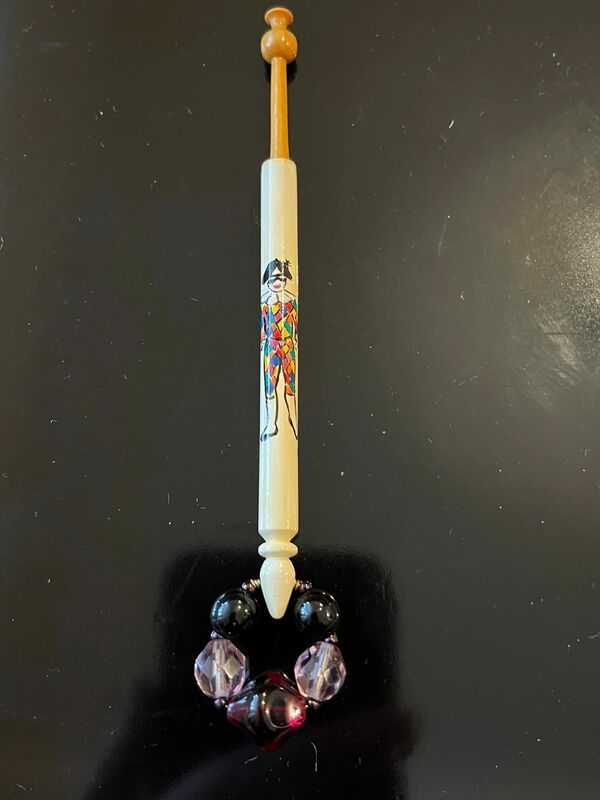
They come in plain woods, exotic woods, painted, spliced, tinseled, inlaid ... you name it, there is a bobbin that you can find to make your desire. I even have some from M&D Davis which I've beaded myself.
For more on the bobbins shown see the FTM pages on David Stanley and Janet Retter
Bone Bobbins
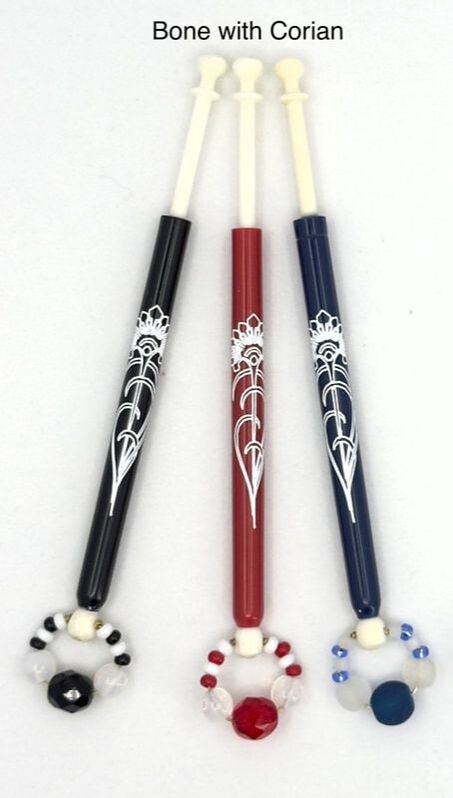
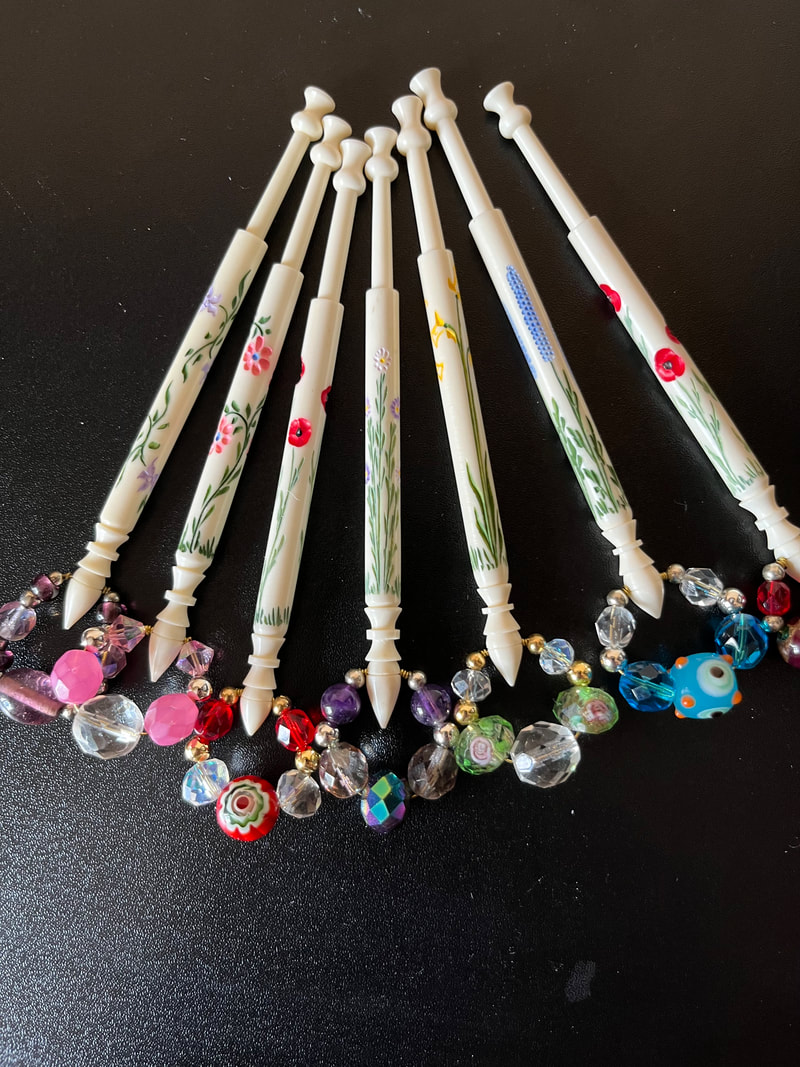
Bone bobbins mainly are made from Bovine Bone (cow bone). There are some instances of Giraffe bone bobbins that were sold by Zim bobbins in the late 80s/90s. Buffalo horn is also sometimes turned into bobbins.
Bone bobbins can be turned thinly and allow for more bobbins on a pillow for the footprint that they take up.l.
When buying second hand bobbins, beaware that a number of ebay sellers miss label plastic Hornsby bobbins as ivory.
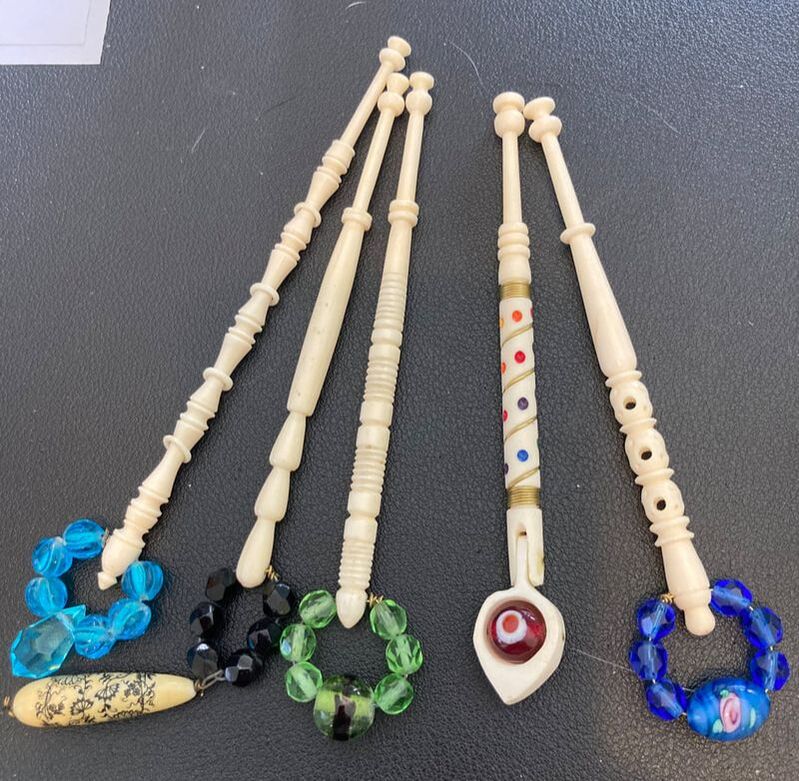
Ivory bobbins are very rare and in the UK were predominately made by Barry Adams.
If you own an ivory bobbin then please be aware that the selling or trading in Ivory is covered by CITES, worldwide and in the UK by the 2018 Ivory Act. Failure to adhere to the act can result in a maximum fine of £250,000 or up to 5 years imprisonment.
Exempltions apply to owning ivory for personal use, giving it away as a gift and leaving it to someone in your will. I strongly recommend that you check with the legislation in your country if you own any ivory bobbins.
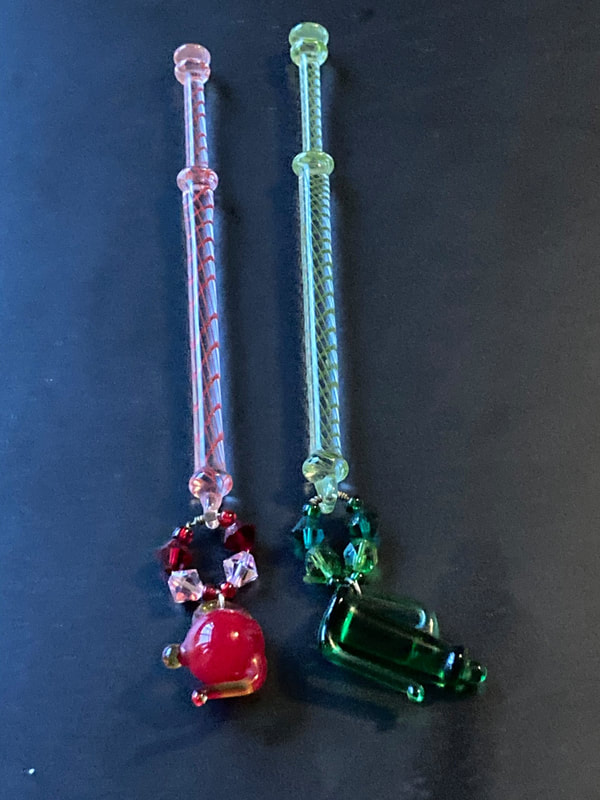
Glass Bobbins
Glass bobbins are made from borosilicate glass which is known for it's hardness. Commercially, this glass is used by Pyrex for their dishes.
In the UK there were two main makers of glass bobbins; Tuffnel Glass and Malcolm J Fowler.
Tuffnel were known for their twisted glass inserts and interesting spangles and pins, whilst Malcolm Fowler was able to capture a variety of things in his bobbins such as stamps, lace and potpourri.
Metal Bobbins
Predominately made of aluminium or brass, metal bobbins allow for a narrower bobbin for the weight.
Although most fully metal bobbin makers have since stopped making them, Jim Tregellas, Australia is still in production.
Chris Parsons has carried on the art of ebony with pewter inlay bobbins and also makes beautiful silver and ebony bobbins
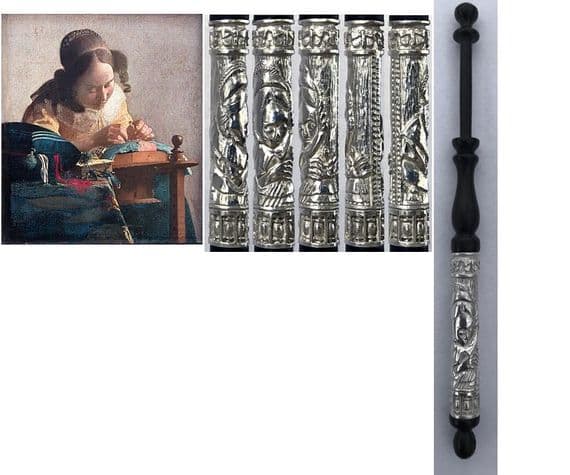
Other Materials
As mentioned, you can find bobbins in many other materials, from Corian or kitchen worksurfaces, Buffalo horn, resin ... if you can turn it, you can make a bobbin from it.
As to how practical these are, well that is down to the hardiness and resiliance of the material. If all fails, they make great talking points when demonstrating.
As mentioned before, one of the main 'plastic' bobbins on the market is the DJ Hornsby bobbin which was produced in white (now cream with age), black and brown. The white/cream ones are often marketed as 'ivory' on ebay. Take care.