
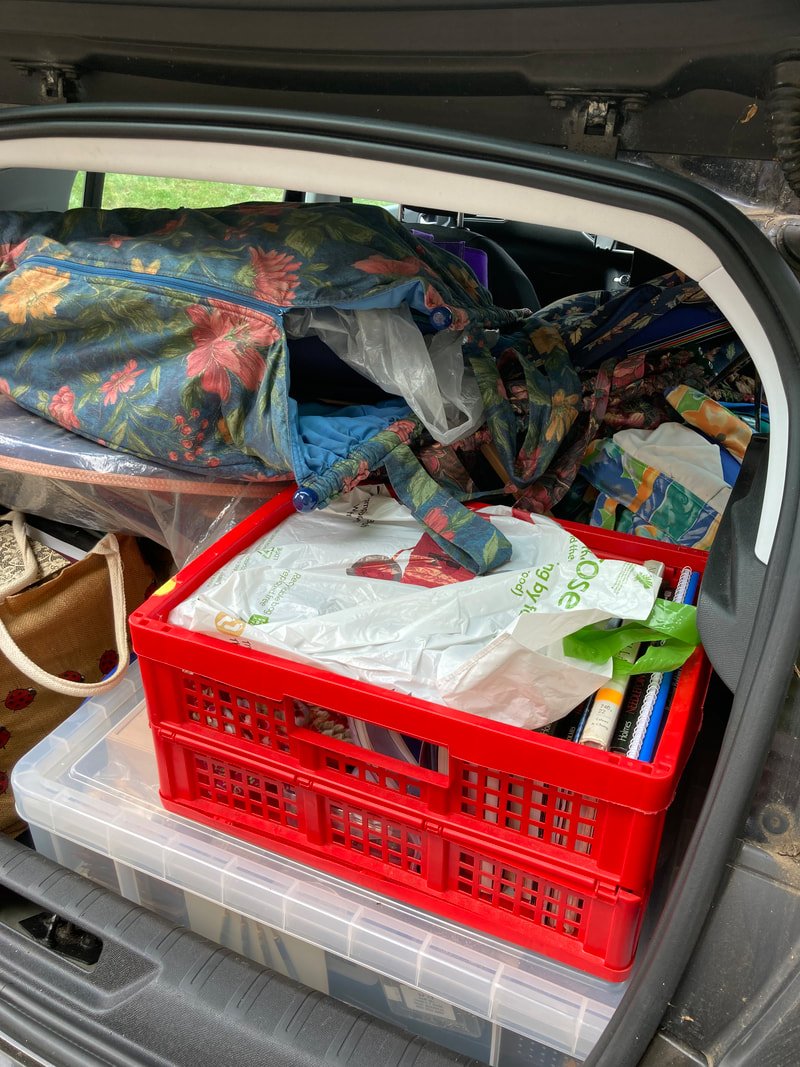
Over the past couple of weeks I've been dealing with a large donation of lace equipment.
A few of the pillows had half finished work on them, which I was assessing to see if the projects could be finished. Some were ok, but others, the thread were too degraded.
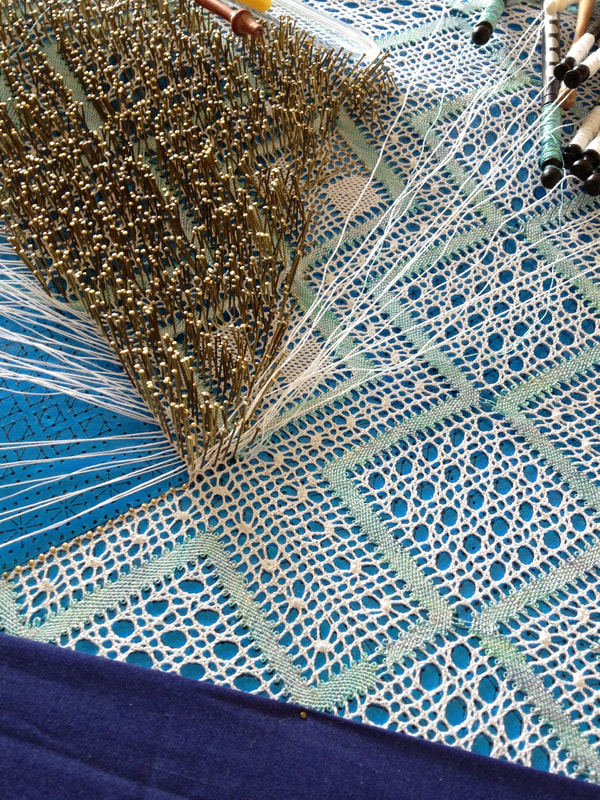
When I started making lace, in the 1980s, I, like many lacemakers, bought brass pins because these were what, traditionally, lacemakers had use.
Over the years, it has become increasingly difficult to obtain good quality brass pins. As the industry declined, many lacemakers have moved to using stainless steel or nickel plated brass
Brass is a mixture of copper and tin.
On its own, copper if very bendy so the tin helps to strengthen it. The tin also stops copper from oxidising to a green colour - verdigris.
This doesn't mean that brass doesn't discolour - it can turn dark from usage. Traditionally lacemakers would have a pin cushion with untreated wool in it so that the lanolin in the wool would make the pins slip into the pillow easily, however the lanolin also caused the pins to discolour.
If you put a magnet to your brass pins, and they are not attracted to the magnet then they are pure brass.
Nickel should not discolour nor should it react to a magnet
Stainless steel is a cost efficient alternative to brass but rusts.
Stainless steel stays sharp, it is incredibly sharp and is a cheaper material to manufacturer.
It's stainless because it does not pick up stains from being in contact with other things, however it is susceptible to moisture and can rust.
Steel is made up of iron and carbon, often with some Chromium in it to help minimise rusting.
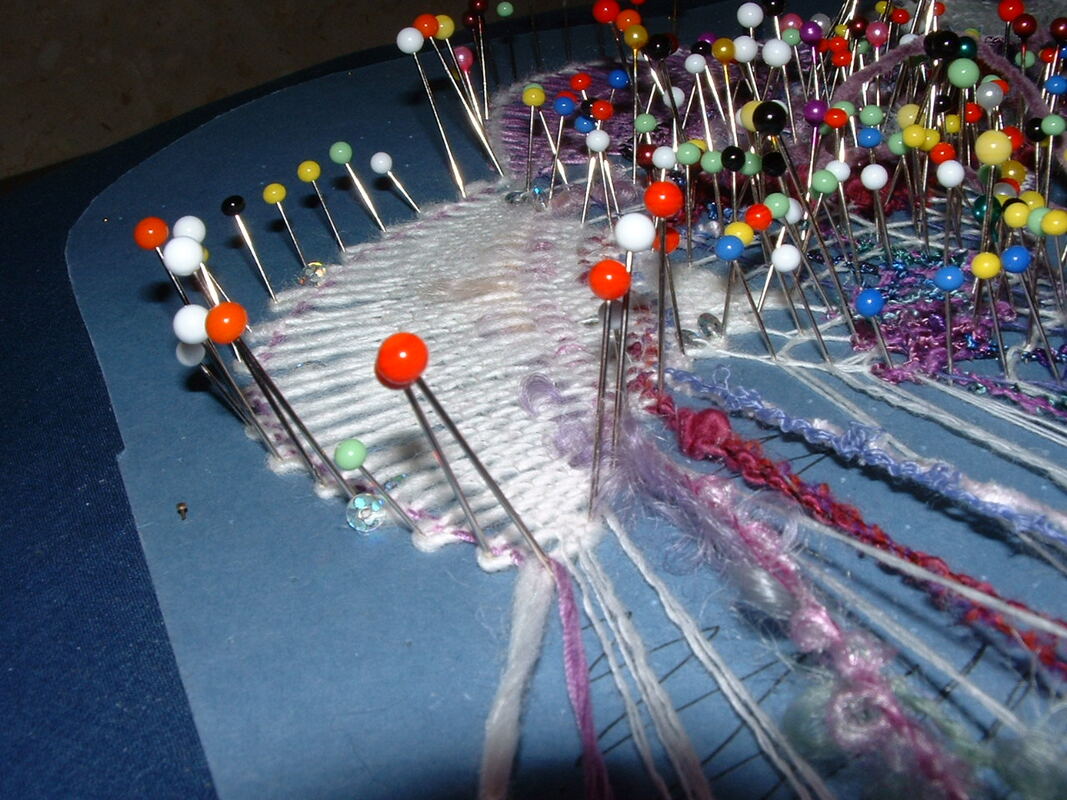
You can tell that a pin has steel in it because it can be picked up by a magnet (that is the iron that the magnet is reacting to).
Our hands, the air, even straw or sawdust pillows naturally have moisture in them. For short periods of time, a few weeks or so, the pins will be fine in the pillow. However, the issue starts when the pins are left in the pillow for extended periods of time.
The first indication will be that the pins don't want to come out of the pillow easily, then you start to see spots on the pins finally, spotting on the lace.
What can you do?
The obvious solution is to not leave your lace on your pillow for extended periods of time.
The next solution is to move to using brass pins.
If that isn't an option, look for nickel plated steel as the nickel will protect the pins.
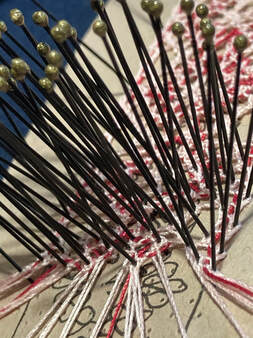
For my finer laces, I use entomology pins (the ones people use for putting bugs in a frame) which are enamel coated, this gives me the strength from steel but the anti rust properties of the enamel. Oh, as they are black with a gold head, they also look cool!
Want to know about pins?
If you are in the UK, then plan a visit to the Forge Needle Museum or read about pins at Brian Lemin's website
Comments (2)
Melanie Runge
·
You did not mention this issue I have with brass pins. I have excess chemicals in my perspiration, I bleach out colored t-shirts, sometimes. Anyway, I turn my brass pins green and that stains my lace. I never use brass anymore.