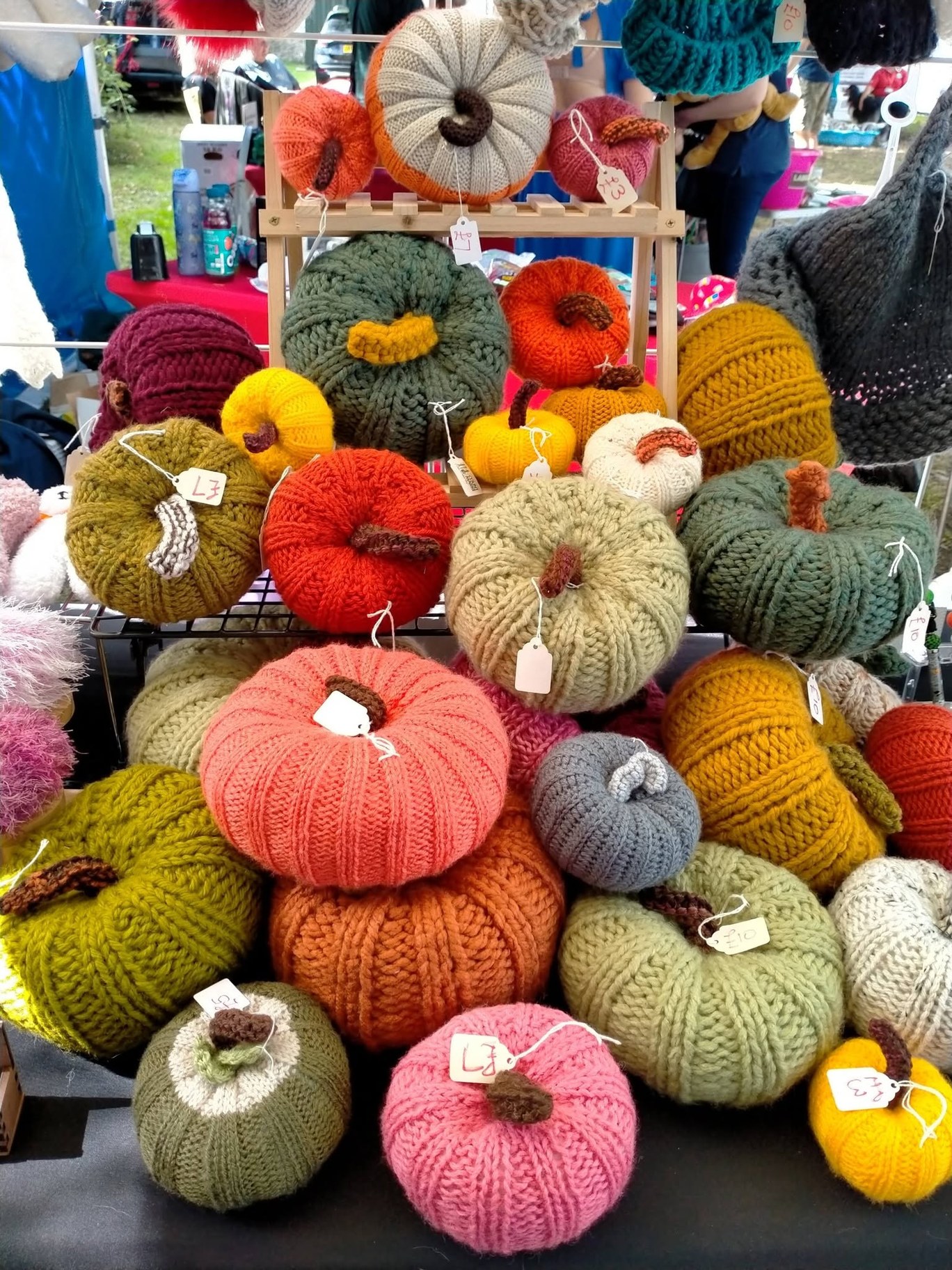
There are pumpkins everywhere. Knitted ones, embroidered ones, cross stitched ones. Then I look for a bobbin lace pattern and suddenly the search becomes rather more of an expedition.
Hello, I’m the Lace Bee, and welcome to The Christmas Lace Notes. Today we’re pausing at the end of October, before tomorrow’s Christmas movie season begins, to look at what we make and why we make it.
Yvonne’s pumpkins started this particular train of thought. They give us a lovely starting point for a conversation about seasonal crafting. How do certain shapes become things we want to recreate in wool, thread or lace? Why do some celebrations fill our pattern collections while others barely seem to feature?
We’ll wander from Halloween to an unexpectedly quiet Munich morning, touch on remembrance and ask when Yule actually begins. Somewhere along the way, I shall probably end up wanting another lace book. This is a recognised hazard of looking through my shelves.
A pumpkin-shaped gap on the lace pillow
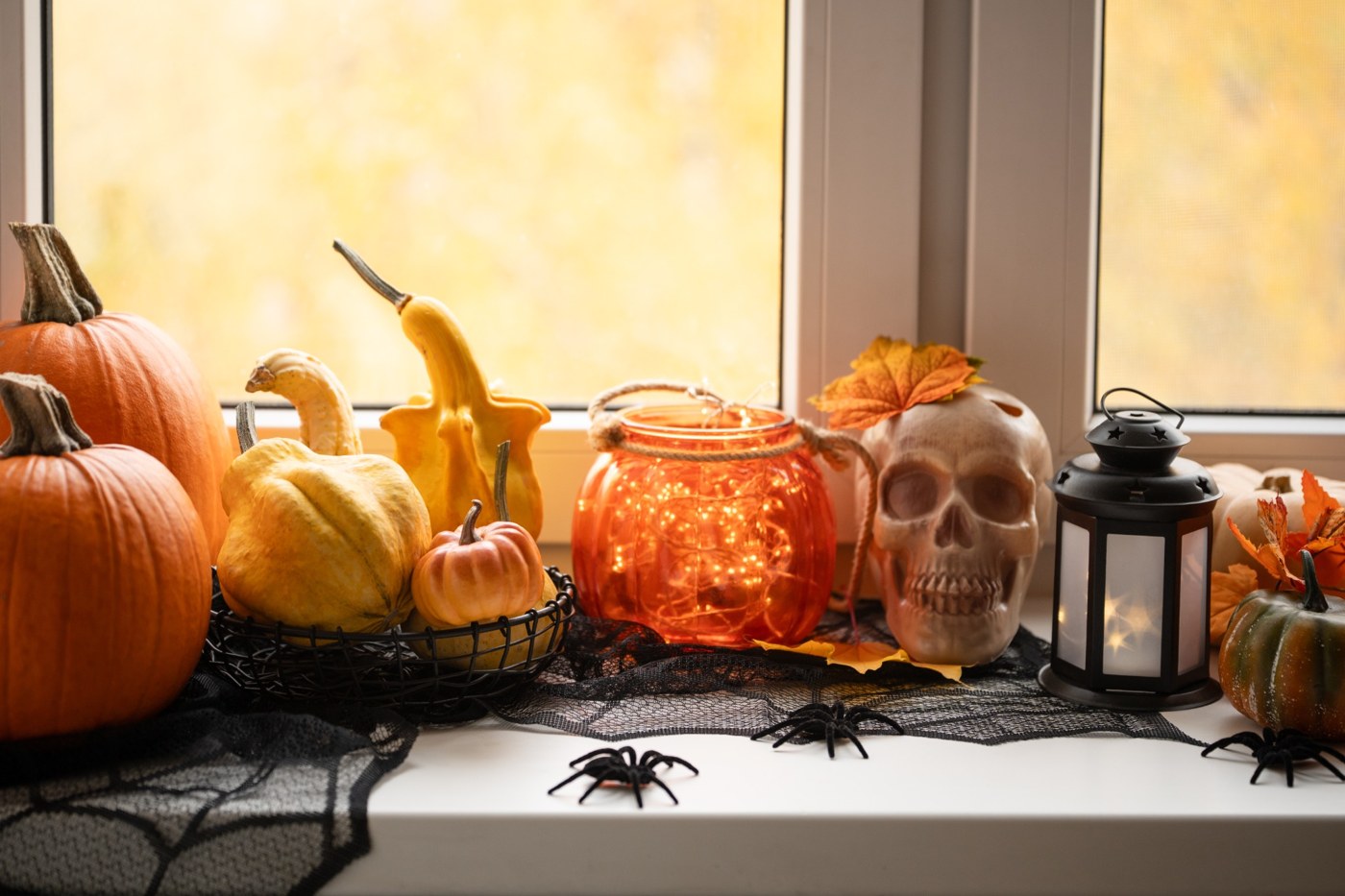
You can hardly miss Halloween when you look at knitting and stitching. There are pumpkins in every conceivable colour, small ghosts, bats and witches. Autumn lends itself beautifully to something you can make for a shelf, a windowsill or a friend.
My experience of looking for bobbin lace patterns feels rather different. Christmas is familiar territory. Stars, angels and decorations are things I expect to find. Halloween sends me hunting.
Before anybody reaches for their pattern folder, I’m saying that I struggle to find them. I haven’t inspected every designer’s back catalogue. If you have a favourite Halloween lace pattern, I would be delighted to hear about it, especially with the designer’s name or a link to their own website.
What interests me is the difference in visibility. Why can one subject feel so abundant in a craft, yet elusive in another?
My first thought was geography. Perhaps the seasonal customs familiar to designers in some of the places we associate with lacemaking have helped shape what gets published. That seems worth exploring, although I wouldn’t want to turn a thought from my lace pillow into a sweeping historical declaration.
Britain and Ireland belong in any conversation about lace too. We can’t neatly divide the map into countries that make lace and places that celebrate Halloween. Within those countries, different communities have their own traditions. Even a single town can mark the same date in several ways.
There may be other influences: who buys pattern books, what suppliers choose to stock and which designs are easy to find online. A pattern tucked inside an older publication can exist quite happily without appearing in my search results.
So perhaps the useful question is this: which celebrations are most visible in the books and patterns available to us? Then we can ask what we would like to see added.
Munich at ten in the morning
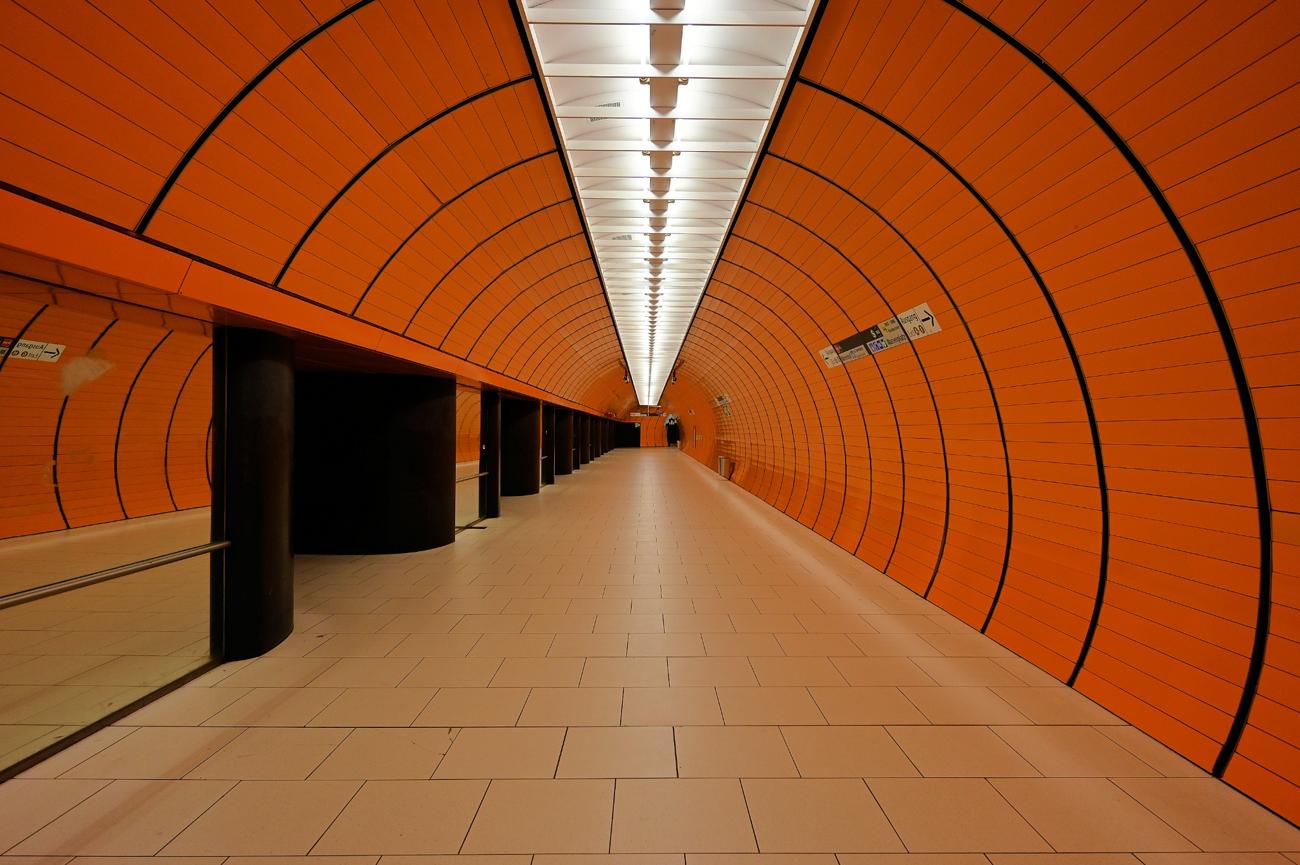
When I was working in Germany, 1 November could catch me out. In Munich, it is a public holiday. I remember being in town at ten in the morning and finding it so quiet that it felt almost deserted.
That was strange when I knew the place through very different experiences. Think of Oktoberfest, then the Christmas markets later in the year. Those are the images that spring to mind: people, activity and so much happening around you. Coming upon that quiet November morning felt like discovering another personality altogether.
It took me a few years to get used to it. Knowing a date is a holiday and experiencing what that does to a familiar place are quite different things.
The day is Allerheiligen, All Saints’ Day. Bavaria recognises 1 November as a public holiday and also as a stiller Tag, a quiet day, with restrictions on certain public entertainments. The Bavarian Interior Ministry explains the distinction in its guide to holidays. That gave me some context for the stillness I remembered.
This isn’t a description of every German town on every November morning. It is my memory of Munich, where the change in atmosphere was striking enough to stay with me long after those work trips.
We often talk about another country’s festivals through the busiest, brightest things a visitor can see. Sometimes the quieter dates tell us something as well. They change the pace of a place. If you arrive expecting an ordinary working morning, that takes a little adjustment.
All Hallows’ Eve and the days that follow
The name Halloween comes from All Hallows’ Eve, the evening before All Saints’ Day on 1 November. All Souls’ Day follows on 2 November, with its particular focus on remembering the dead.
That gives us a cluster of dates, although their meanings and customs vary. A costume party, a church service and a family visit to a grave can sit close together in the calendar without being the same occasion.
Munich’s own explanation of Allerheiligen and Allerseelen makes that distinction clearly. All Saints’ honours the saints, including those without their own named feast day. All Souls’ is devoted to prayer for the departed. Families may visit and tend graves on the public holiday, which helps explain why the observances can overlap in everyday experience.
Halloween also has a strong connection with Irish seasonal customs. The National Museum of Ireland describes Samhain on 1 November as a traditional marker of winter’s beginning, with much of the celebrating taking place the previous evening.
Its accounts include disguises, games and lanterns carved from turnips. The museum explains that the pumpkin lantern familiar today developed in America from that Irish tradition. I’ve linked its pages for anyone who would enjoy following that history further.
That detail about the lantern is rather fitting for a discussion about making. A familiar idea travels, meets different materials and changes shape. Eventually, the newer version becomes so recognisable that we can forget there was another form before it.
And now we have soft pumpkins made with needles and yarn. Something once carved can become something stitched, stuffed and brought out again next autumn. The shape carries the season even when its material changes completely.
I like that as a way into craft history. We don’t have to pretend every knitted pumpkin has a direct ancestral line back to a particular lantern. We can simply notice how people keep finding fresh ways to make familiar seasonal things.
Remembering through what we make
Día de Muertos, the Day of the Dead, deserves its own place in this conversation. It belongs to Mexican traditions of remembering loved ones, with observances around the end of October and beginning of November.
UNESCO describes how Indigenous communities in Mexico prepare offerings, flowers, candles and favourite foods to welcome the temporary return of deceased relatives. It explains that these celebrations blend Indigenous religious traditions with Catholic observances. Practices differ between communities.
That is a reason to look beyond the decorations we might recognise in a shop window. Families, beliefs, and relationships shape what we see. We can be interested and appreciative while learning what those things mean to the people making them.
For me, the connection to our wider conversation is remembrance. Making something can bring a person to mind. A colour might remind us of somebody’s favourite jumper. A decoration can return us to a Christmas shared years ago. We pick it up and find ourselves telling the story again. Every time I think of purple, I remember my mum, Jenny Joseph’s poem Warning and mum’s funeral.
That doesn’t make our own habits equivalent to somebody else’s religious or cultural observance. It does give us a human reason to pay attention: we understand how much feeling can live inside an ordinary object.
Lace is particularly good at carrying those associations for me. We remember where a pattern came from, who taught us a technique, or who we were making something for. The finished piece holds more than the hours spent at a pillow.
Perhaps that is another question to keep beside us this season. When we put a handmade decoration out, whose story comes with it?
Back to the Christmas books
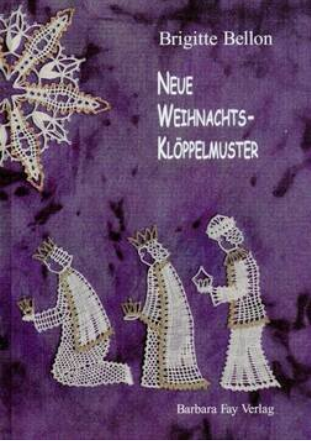
Germany has given me plenty of Christmas inspiration, from those market visits to books on my own shelves. If you have ever wondered about the word on their covers, Weihnachten means Christmas.
Two examples in my book blog are Himmlische Weihnachten, Heavenly Christmas, by Christine Mirecki and Neue Weihnachts-Klöppelmuster, New Christmas Lace Patterns, by Brigitte Bellon.
The covers alone show the direction of this conversation: a lace star on one, crowned figures and more festive lace on the other. These are specific books I can point to when I talk about Christmas being visible in my collection.
My bookcase is searchable on The Lace Bee website, so you can look up those titles there. I’ve included that link in the article and episode notes.
Being me, I also went looking at a supplier. Klöppelshop’s new listings include Ariana: Wirbelwind der Fäden 2, described as a collection of twenty-four Christmas tree ornament patterns. That is another example of the seasonal designs available to lacemakers, and I’ve linked the listings so you can explore for yourself.
Between the books I own and the patterns being offered, Christmas is well represented in the places I’m looking. My original question remains: why does finding Halloween feel more difficult?
I suspect the answer will involve several things rather than one neat explanation. The traditions designers know, the requests they receive and the interests of their customers could all play a part. Those are possibilities to investigate, rather than conclusions I can prove from two books and a shop page.
There is also something useful about noticing a gap. It can become an invitation. A pumpkin, a bat or an autumn leaf might be the starting point for a new design rather than another reason to complain about what we can’t find.
We already work with open spaces, shapes and outlines in lace. A spider’s web almost invites the comparison, although I shall leave the structural engineering to the spider. What would you choose to turn into a small seasonal piece?
So when does Yule begin?
With all these dates gathered near the start of November, it is tempting to bundle the whole darker season together. Then somebody mentions Yule and we discover another calendar question.
For many modern Pagan celebrations, Yule centres on the winter solstice, around 21 December in the Northern Hemisphere. It has roots in Germanic and Scandinavian midwinter traditions. Different historical periods and present-day communities don’t all give us one identical starting date or length of celebration.
St Neots Museum has an introduction to Yule and some of its associations, which I’ve linked for further reading. I’m keeping the point here fairly simple: Samhain’s autumn threshold and Yule’s midwinter celebrations occupy different places in the year.
My choice to begin Christmas films on 1 November is a personal ritual. It doesn’t establish the start of Yule, Advent or anybody else’s observance. It establishes when I will be sitting down with A Castle for Christmas.
Advent belongs to its own Christian calendar too. We can enjoy the way these seasons sit beside one another without making their names interchangeable.
There is plenty of room between an October pumpkin and a December tree. We can enjoy the autumn colours, remember people we love and plan a little festive making. We can even start watching Christmas films while the pumpkins are still on display. I am prepared to defend that arrangement.
What would you put on the pillow?
So that is where Yvonne’s pumpkins have taken me: through pattern books, a quiet German morning and several different ways of marking the turn of the year.
I’d love to hear which celebrations appear in your own making. Do you have seasonal pieces that come out every year? Have you made Halloween bobbin lace, or found a designer whose work deserves a wider audience?
Please send me the title and designer, or a link to where the pattern is offered. We can celebrate somebody’s work without passing around copies of their designs.
Perhaps you have no intention of making a bat. An autumn leaf might suit you better. Or you may already be surrounded by Christmas stars and wondering why I am encouraging another project.
That is a fair question. My answer is that curiosity has always been fairly dangerous around a craft collection.
Tomorrow, 1 November, we move into our Christmas movie season with Put the Kettle On: A Christmas Movie a Day Returns. I’ll be talking about why those films matter to me, the yarn connection behind my opening choice and how a familiar story can become part of a tradition.
For today, I’m happy to stay here a little longer, in the space before Christmas. There are pumpkins to admire and a lace pillow waiting. Thank you for joining me.
Have a seasonal lace pattern to recommend? Send me its title, designer or a link.